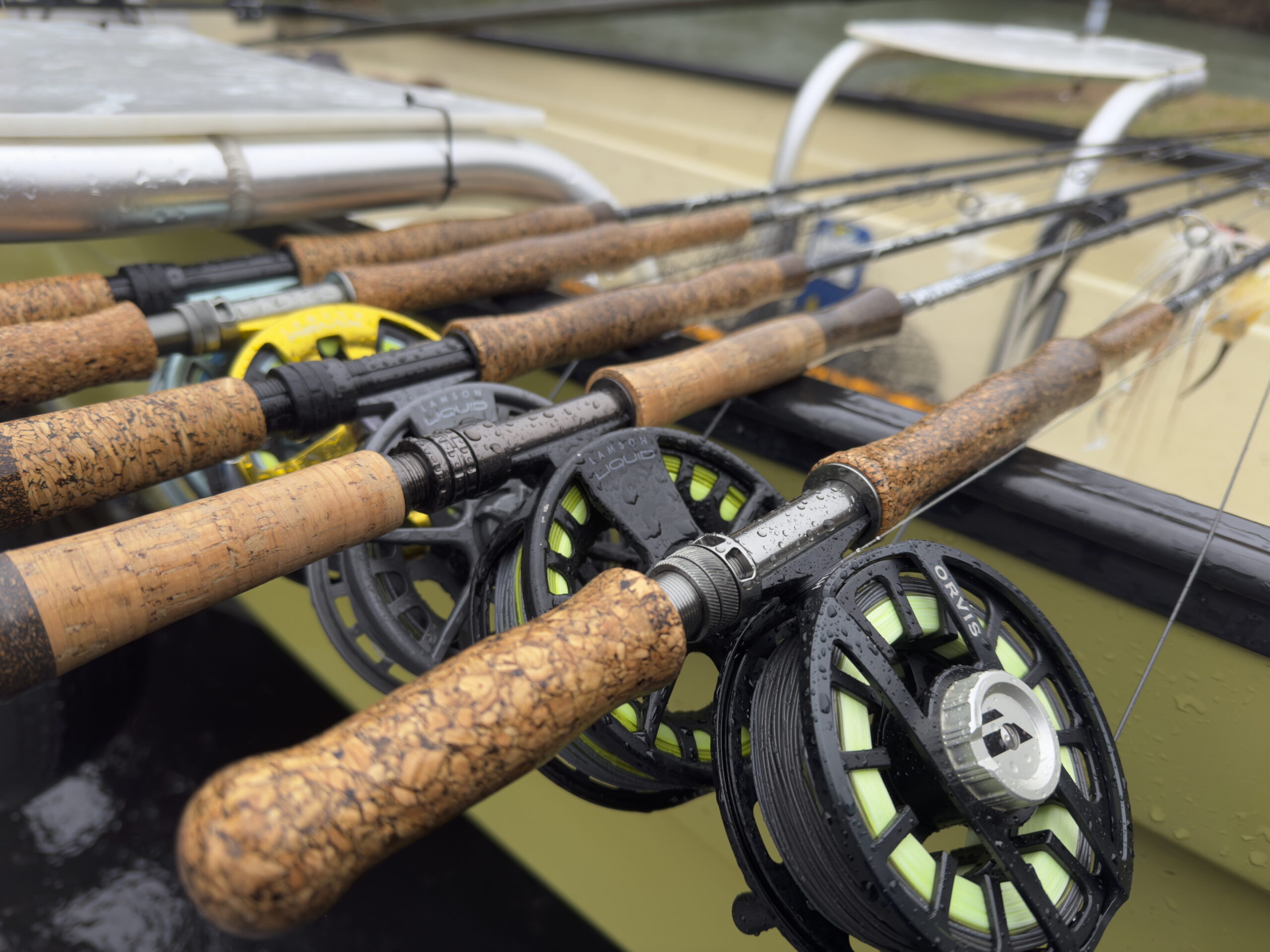
Musky fishing can be one of the more the gear-intensive forms of fly fishing. The flies are big, the rods are big, and the fish are big (hopefully). Over the years, I’ve experimented with a lot of different setups, and I’ve gradually settled into a few rods I I use for slightly different purposes.
In this post, I’ll walk through the three setups that live in my boat during musky fishing trips. Is it necessary to carry three rods? Absolutely not. But I’ve found that having multiple outfits rigged and ready makes me much more likely to change flies, depths, and presentations throughout the day.
It also keeps me from having to swap reels and fly lines on the water—which is something I absolutely hate doing.
Setup #1: The All-Purpose Musky Rod
Rod: IMX Pro M 9′ 11wt: https://www.gloomis.com/collections/f…
Reel: Lamson Remix -9+: https://amzn.to/45KRUDj
Line: SA Sonar Titan 11wt I/3/5: https://amzn.to/3M3gTLm
If I could only bring one musky rod, this would probably be it.
The 9-foot length sits in the sweet spot for musky fishing. It’s long enough for effective figure eights at the boat while still being manageable for overhead casting and water hauling.
The IMX Pro Musky handles virtually every fly style I commonly fish. It throws articulated flies, weighted patterns, game changers, and dumbbell-eye flies without feeling overly cumbersome.
Smaller, Lighter Reels?
One mistake I made early in my musky fishing journey was assuming bigger was always better.
I fished a heavy 12-weight setup paired with a large saltwater-style reel. By the end of the day, my elbows, shoulders, and forearms were incredibly sore.
Musky are known as the “fish of 10,000 casts” for a reason. You’re constantly casting, stripping, and figure-eighting, so every ounce matters at the end of the day.
That’s why I intentionally use relatively lightweight reels. Musky simply don’t require massive drag systems, and they’re rarely going to put you into your backing. Instead, I’d rather save weight and reduce fatigue.
The Lamson reels have always worked well for me because they’re lightweight, durable, and have plenty of drag for a musky.
Why I Like the Lamson Liquid (better than the remix)
One feature I particularly appreciate on the Liquid series is the cast reel seat. The remix, although it is a more expensive reel, has a reel seat mounted with screws.
That may sound insignificant, but musky fishing puts a lot of torque on your equipment. Constant casting can gradually loosen traditional screws on reel seats over time.
The cast in seat eliminates that issue entirely.
If I were starting from scratch today, I’d probably put Lamson Liquids on all of my musky rods.
My Go-To Musky Line
The Scientific Anglers Titan Triple Density is probably my favorite musky line overall.
The intermediate running line combined with a faster-sinking head helps get flies deeper while still maintaining solid connection for strip strikes. It sinks efficiently without creating excessive belly in the line.
Leader Setup
My leaders are intentionally simple.
I generally fish:
- 2–4 feet of 40-pound fluorocarbon
- 12–18 inches of wire tippet
Musky are not particularly leader-shy fish. They’re willing to follow flies right to the boat and eat during a figure eight. Because of that, I don’t see much benefit in downsizing leader material.
Instead, I want enough strength to put maximum pressure on fish, and a short length to make figure eights, and the following cast easier.
Setup #2: The Lightweight (My favorite?)
Rod: TFO BC Big Fly 9′ 10wt: https://amzn.to/4kkhg0S
Reel: Lamson Liquid -9+: https://amzn.to/3ZIOehM
Line: SA Titan 10wt I/3/5: https://amzn.to/4r5ldcb
Over the last few seasons, this is becoming my favorite musky outfit.
The first thing you notice when you pick it up is how much lighter it feels than the other rods.
That may not sound like a big deal at the beginning of the day, but after eight hours of casting, It really helps.
What This Rod Does Best
This setup excels with:
- Smaller game changers
- Double deceivers
- Weedless patterns
- Non-articulated flies
- Synthetic baitfish patterns
As fly materials have evolved, many musky flies have become lighter and easier to cast. Modern synthetic materials don’t absorb nearly as much water as traditional bucktail-heavy patterns.
Because of that, I’ve found myself fishing this lighter 10-weight more and more.
Today, this rod probably accounts for roughly 40% of my musky fishing.
The Rod I Recommend Most Often
If someone asked me for a single musky setup recommendation, this would be it.
A TFO Big Fly 10-weight paired with a Lamson Liquid and a Scientific Anglers Titan Triple Density line is hard to beat.
It’s lightweight, forgiving, versatile, and capable of handling the vast majority of musky flies you’ll encounter.
It’s also the rod I hand to newcomers who are trying musky fishing for the first time.
Whether you’re coming from trout fishing, bass fishing, or saltwater fly fishing, this setup is approachable and easy to fish all day with a little adjustment.
Setup #3: The Big Fly Rod
Rod: Orvis Clearwater 9’4″ 11wt: https://www.orvis.com/product/clearwa…
Reel: Lamson Liquid -9+: https://amzn.to/3ZIOehM
Line: SA Musky 500grn: https://scientificanglers.com/product…
This is my dedicated big-fly setup.
While many musky anglers jump to a 12-weight for oversized flies, I’ve personally never felt the need. At least in the waters I fish, an 11-weight can comfortably handle extremely large patterns when paired with the proper line.
The 500-grain Scientific Anglers Musky Line excels in this role. Its oversized head loads the rod easily and launches large flies well. In all honesty, an 11wt or 12wt titan would work in this role as well, but I do prefer the thicker running line present on the sonar musky.
This rod, being 9’4″ has an extra four inches of length on my other two. The extra four inches may not sound significant, but they do make a small difference for:
- Water hauling
- Managing heavy flies
- Keeping large hooks farther from your body
- Generating leverage during casts
When you’re throwing giant articulated flies, those extra inches help keep those 5/0 hooks just a little further away.
This rod typically comes out when:
- I want to fish larger-than-normal flies
- I need to get flies deeper
- A fish has followed multiple times and I want to show it something dramatically different
This is easily my least-used setup, but it’s nice having it ready when the situation calls for it.
Setup #3: The Lightweight (My favorite?)
Rod: TFO BC Big Fly 9′ 10wt: https://amzn.to/4kkhg0S
Reel: Lamson Liquid -9+: https://amzn.to/3ZIOehM
Line: SA Titan 10wt I/3/5: https://amzn.to/4r5ldcb
Over the last few seasons, this is becoming my favorite musky outfit.
The first thing you notice when you pick it up is how much lighter it feels than the other rods.
That may not sound like a big deal at the beginning of the day, but after eight hours of casting, It really helps.
What This Rod Does Best
This setup excels with:
- Smaller game changers
- Double deceivers
- Weedless patterns
- Non-articulated flies
- Synthetic baitfish patterns
As fly materials have evolved, many musky flies have become lighter and easier to cast. Modern synthetic materials don’t absorb nearly as much water as traditional bucktail-heavy patterns.
Because of that, I’ve found myself fishing this lighter 10-weight more and more.
Today, this rod probably accounts for roughly 40% of my musky fishing.
The Rod I Recommend Most Often
If someone asked me for a single musky setup recommendation, this would be it.
A TFO Big Fly 10-weight paired with a Lamson Liquid and a Scientific Anglers Titan Triple Density line is hard to beat.
It’s lightweight, forgiving, versatile, and capable of handling the vast majority of musky flies you’ll encounter.
It’s also the rod I hand to newcomers who are trying musky fishing for the first time.
Whether you’re coming from trout fishing, bass fishing, or saltwater fly fishing, this setup is approachable and easy to fish all day with a little adjustment.
Final Thoughts
Lightweight Fly Outfit:
- TFO Big Fly 10-weight
- Lamson Liquid
- Scientific Anglers Titan Triple Density
General Purpose Outfit:
- G. Loomis IMX Pro Musky 11-weight
- Lamson Remix
- Scientific Anglers Titan Triple Density
Big Flies, Deep Presentations, Spare Rod:
- Orvis Clearwater Musky 11-weight
- Lamson Liquid
- Scientific Anglers Musky Line 500grn
At the end of the day, comfort matters more than many anglers realize. Musky fishing is already physically demanding, and choosing lighter, more efficient equipment can make a huge difference over the course of a long season.
The best rod is the one that allows you to make one more cast, stay focused, and keep your fly in the water.
And when it comes to musky fishing, sometimes that extra cast is the one that counts.
The Links Included above are amazon affiliate links for your convenience, please support your local fly shop.
Leave a Reply