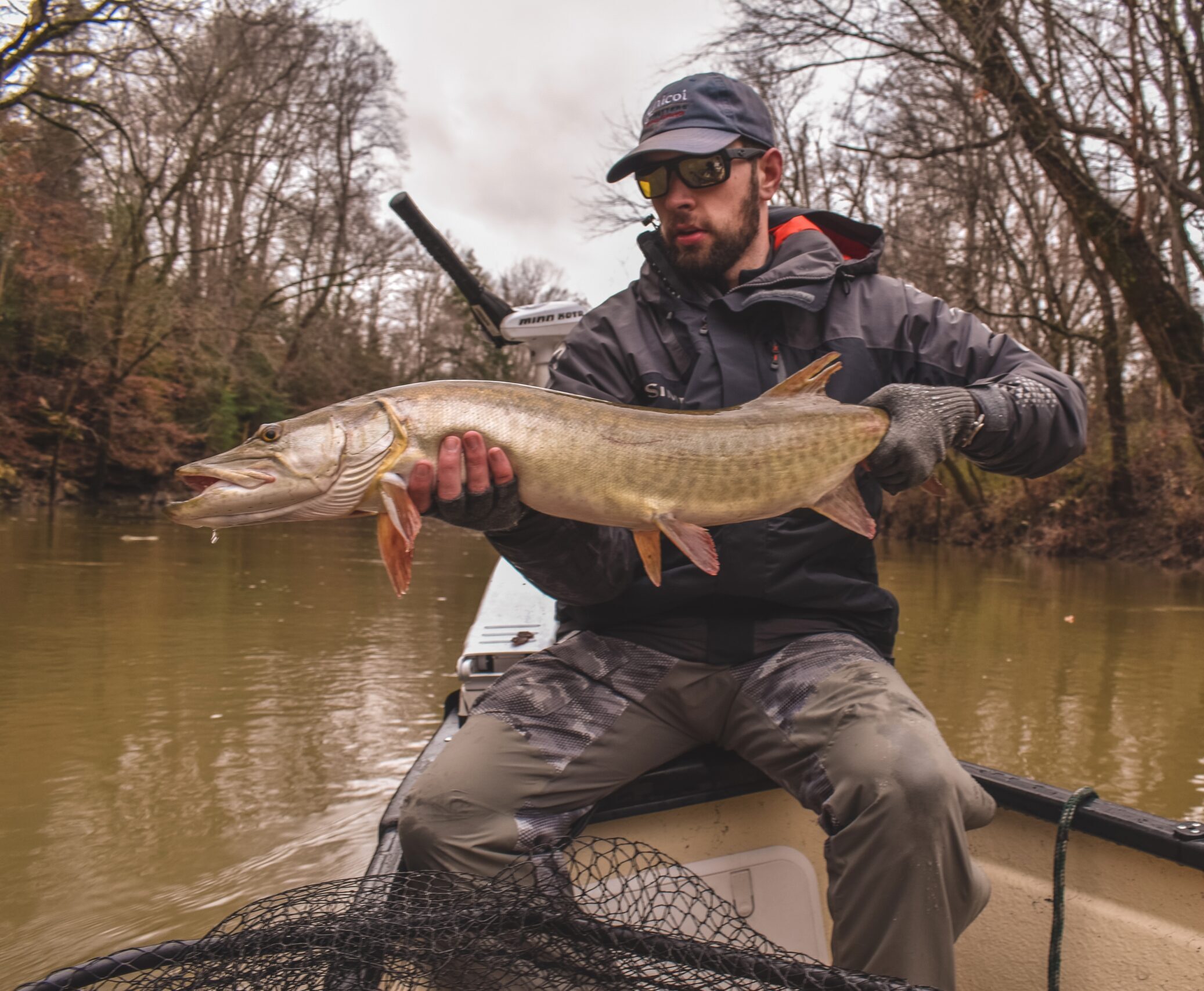
As far as freshwater fishing goes, musky fishing is very gear intensive. Oversized nets, giant flies, big rods, and at least for winter musky- plenty of clothes to stay warm. The more I fish, and the more time I spend on the water, the more I come to realize the beauty and efficiency in keeping my gear simple and straightforward.
In this post I plan to outline the contents of my Boat Box, setup for Musky fishing. This box goes with me pretty much any time I step foot in my towee or raft, but the actual contents change with the particular trip and quarry.
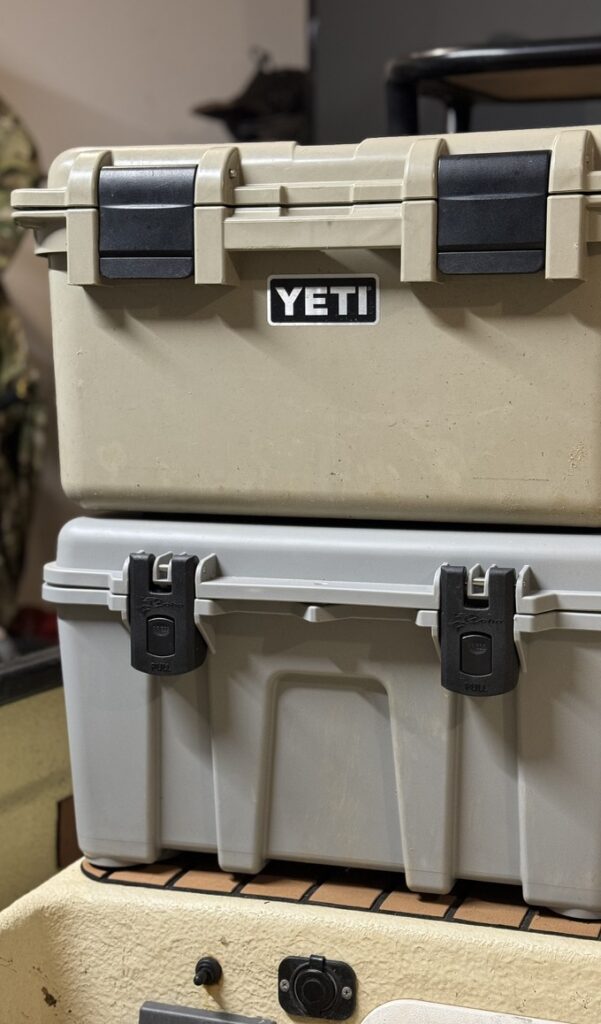
Why the YETI GoBox?
Let’s be honest — the price of the YETI GoBox is no joke. But when you compare it to boat bags from Fishpond, Simms, or Orvis, the cost starts to make more sense. Those bags run close to $300, and frankly, they’re not going to hold up like the GoBox.
For me, it’s not just a storage box. It’s also a seat, a casting platform, and a place to stash gear in a small skiff like the Towee. When space is limited, having one item that does multiple jobs is a game-changer. I have found that when moving front to back in the towee, having items I can step on- instead of having to step over, makes the boat much more livable for multiple anglers.
Let’s walk through what I pack in each compartment and why it earns its spot.
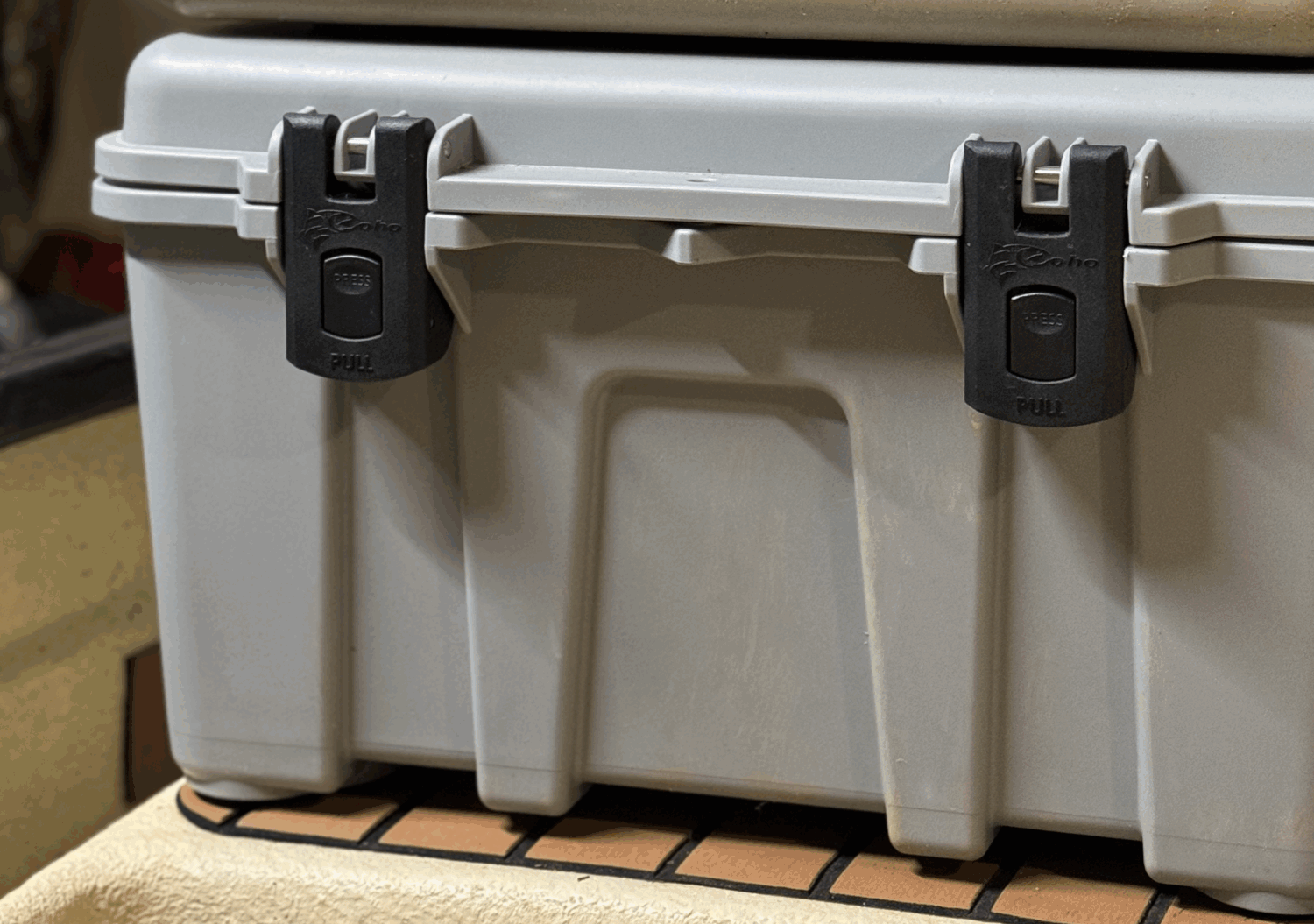
Want a cheaper option? Watch my video on the Coho Pack & Carry here:
Coho Pack and Carry Video
Lid Organizer — Quick-Access Essentials
Top Zip Pocket – Sun & Weather Protection
- Simms SolarFlex Gaiter: Light, breathable sun protection for your neck.
- Simms SolarFlex Gloves: Sun and abrasion protection for hands when rowing or poling.
- 6–7mm Nitrile Gloves: Keep hands dry (and warmer) in cold conditions. A winter essential.
Left Zip Pocket – Tools & Small Gear
- Fly Line Cleaning Wipe: Helps restore slickness to older lines — not used often but nice to have.
- Nail Knot Tool: Rarely used, but critical if you ever need to re-rig a line with limited tools.
- Measuring Tape: Cloth-style — for measuring fish quickly without damaging them.
- GEL Super Glue: Perfect for fly repairs, securing knots, or on-the-go gear fixes.
- Split Ring Pliers: Mostly for flies with split ring connections — but I also use them for conventional gear as well
- BIC Lighter: Used for melting tag ends or emergency situations.
- Hook File: Keeps hook points sticky sharp — crucial when targeting tough fish like musky.
- Tungsten Beads (5.5mm): Add weight to get your fly deeper, especially in faster or deeper water.
- Stream Thermometer: Helps track water temps and correlate with fish behavior.
- Black Sharpie: For marking flies — adding eye spots or altering colors on the fly.
- Bass Leaders: Backup leaders in case the musky fishing is slow and you want to switch tactics
Right Zip Pocket – Personal/Delicate Items
- Spare Contacts: Because fishing with blurred vision isn’t as fun
- Stripping Guard: Protects your finger on long days of aggressive strip sets.
- Boat Registration & ID Card: Always good to have on hand in case of checks or emergencies.
- Lens Cleaning Cloth + Wipes: Dirty Lenses Suck.
- Rite in the Rain Notebook: For water temp notes, fly patterns, fish behavior, or leaving a note in a pinch.
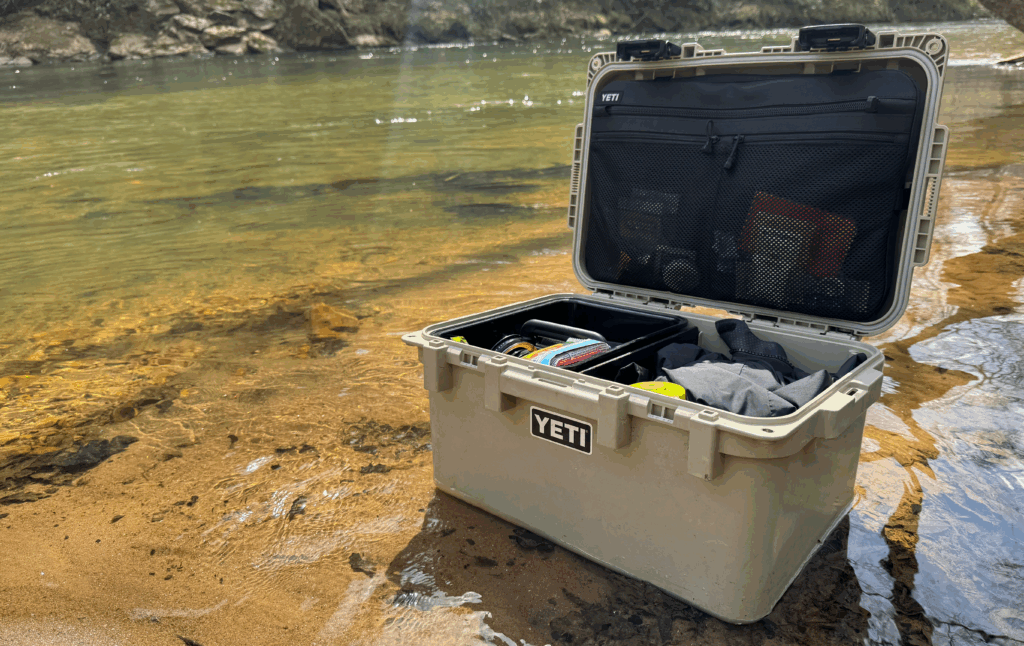
Storage Tray — Stuff I Reach for Constantly
- Snacks (Protein Bars, Clif, Nature Valley): Long days need reliable fuel, and the slower the fishing, the more I seem to eat!
- Electrolyte Mix
- Sunglasses: I always carry two pairs:
- Costa Amber/Green Mirror: For sunny conditions.
- Costa Low Light Silver Mirror: For dawn/dusk or cloudy days.
- Old Fly-Tying Scissors: Repurposed as line cutters for mono, braid, and wire.
- Small Tippet Sizes (8–20 lb): Just in case I want to throw smallmouth flies or need to downsize.
- Musky Wire Leaders:
- Ni-Ti Wire: Flexible and stealthy for clear water.
- Coated Stainless Wire: Cheaper for general use.
- Open Space to be used for a phone, wallet, keys, etc
Under the Tray — Deep Storage
- Headlamp: For launching at dawn or navigating post-sunset.
- Waterproof Gloves + Windstopper Beanie: Crucial winter gear for staying warm while running the boat. It can get really, really cold.
- SA Wrist Spools (30/40/60 lb Fluoro): Leader material used behind the wire tippet — durable and abrasion-resistant.
- Hook Cutters: Emergency tool for deep-hooked fish — or if you ever hook yourself.
- Very Long Pliers: Keep your hands safely away from rows of sharp musky teeth during release.
- Jaw Spreaders x2: Helps get hooks out safely without damaging the fish — or your fingers.
- Spare Reel Spool: In case of line failure, tangles, or wanting to switch tactics on the fly.
Emergency Kit — Stored in a Patagonia Black Hole Cube
- CAT Tourniquet: Critical emergency tool — especially with late night boat runs and outboard motors
- Sunscreen + Bug Wipes: Protection from sun and bugs — rarely used, but nice to have
- Water Purification Tablets: In case you get stranded or need to purify water in an emergency.
- Parachute Cord (15 ft x2): Use for tying off or whatever else you need rope for
- Emergency Whistle: For signaling, or waking up your buddies when the musky aren’t cooperating
- Flashlight: Backup in case the headlamp fails.
- Toilet Paper: $%?£ happens
- Small First Aid Kit: For cuts, hooks, scrapes, or small injuries on the water.
Other Main Compartment
- Large open space for my other anglers gear, food, clothes, etc
- Water Bottle:
- Nalgene: In cold weather
- Insulated Bottle: In hot weather to keep water cool
- Pliers with Cutters: For rigging, fixing gear, and quick hook removal
Final Thoughts
My GoBox isn’t just a storage solution — it’s the core of my musky boat setup. Especially in small skiffs like the Towee, having everything in one rugged, reliable place cuts clutter and keeps you focused on fishing.
If you want to copy this setup or build your own variation, the gear list above is a great place to start. If you’ve got questions, drop a comment— I try to answer every one.